
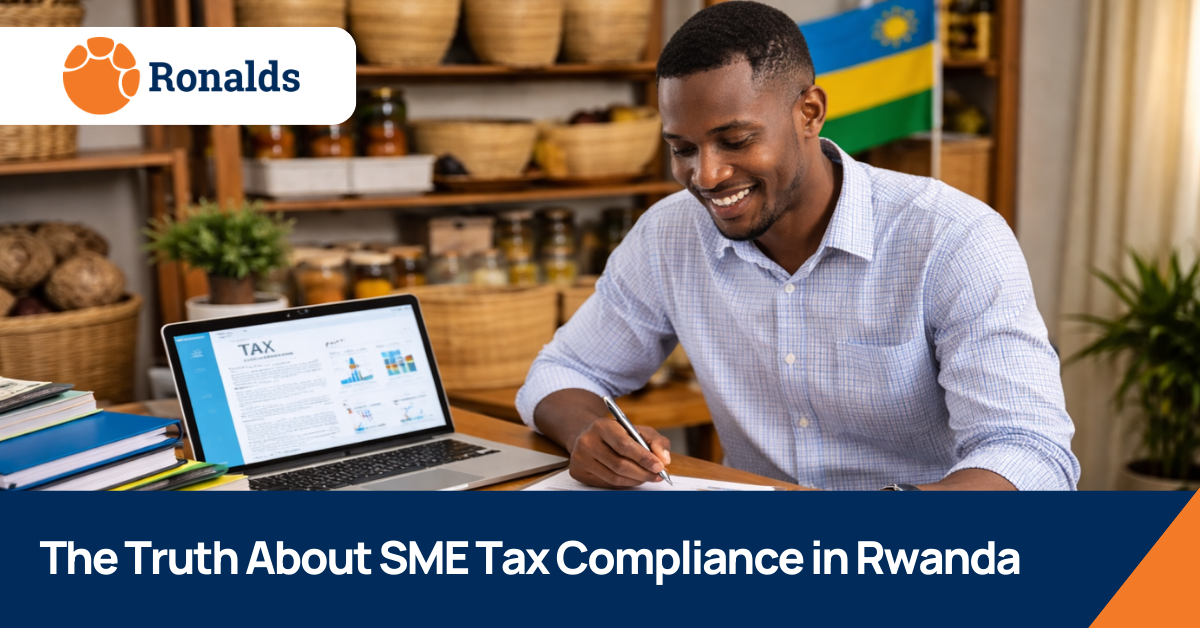
Small and medium-sized enterprises (SMEs) are the backbone of Rwanda’s economy. Across sectors such as trade, agriculture, construction, manufacturing, and services, SMEs drive employment, innovation, and economic growth. However, alongside these opportunities comes a responsibility that many entrepreneurs quietly struggle with: tax compliance in Rwanda.
For many SMEs, tax compliance is not simply about filing returns with the Rwanda Revenue Authority (RRA). Instead, it involves understanding evolving regulations, maintaining proper financial records, managing cash flow, and ensuring timely reporting.
Consequently, many growing businesses turn to experienced accounting and tax advisory professionals to help navigate these complexities and avoid costly compliance mistakes.
Why Tax Compliance Is Challenging for Rwanda’s SMEs
1. Keeping Up With Rwanda Revenue Authority (RRA) Regulations
One of the most significant challenges facing SMEs is keeping up with the evolving tax regulations administered by the Rwanda Revenue Authority.
Businesses must comply with several tax obligations, including:
- Corporate Income Tax (CIT)
- Value Added Tax (VAT)
- Pay-As-You-Earn (PAYE)
- Withholding tax
- Electronic Billing Machine (EBM) regulations
For SMEs without dedicated finance teams, understanding and tracking these requirements can quickly become overwhelming. Therefore, working with experienced tax compliance and advisory experts in Rwanda helps businesses stay compliant and avoid penalties.
2. Limited Tax and Accounting Knowledge
Many entrepreneurs possess strong technical or industry expertise but may lack formal training in accounting or tax law.
As a result, SMEs often struggle to understand:
- VAT registration thresholds
- Allowable business expenses
- Corporate income tax calculations
- Withholding tax obligations
Without proper guidance, even small errors can lead to incorrect filings, tax reassessments, or penalties.
Partnering with professional accounting and business advisory services in Rwanda can help SMEs interpret tax regulations correctly and implement effective financial systems.
3. Cash Flow Constraints Affect Compliance
Cash flow management is another major obstacle for many SMEs.
Because smaller businesses often operate with tight margins, tax payments may compete with urgent operational costs such as:
- Employee salaries
- Supplier payments
- Rent and utilities
- Inventory purchases
Additionally, businesses in seasonal industries may experience irregular income cycles. Consequently, meeting tax deadlines can become particularly stressful.
Strategic financial planning and professional advisory support can significantly improve tax forecasting and cash flow management.
4. Weak Financial Record-Keeping Systems
Although Rwanda has made significant progress in promoting digital tax systems such as Electronic Billing Machines (EBMs), some SMEs still struggle with maintaining accurate records.
Common issues include:
- incomplete financial documentation
- manual bookkeeping errors
- inconsistent accounting practices
Poor documentation increases the risk of tax penalties and makes responding to tax audits more difficult.
Working with professional audit and assurance specialists in Rwanda can help businesses strengthen financial reporting systems and ensure compliance with regulatory requirements.
5. Adapting to Rwanda’s Digital Tax Systems
Rwanda has embraced digital tax administration, including online filing and electronic invoicing. While these systems improve transparency, they also require:
- reliable internet access
- accounting software
- digital literacy
For some SMEs, especially those in rural areas, adapting to these systems can present challenges. However, digital tax compliance is essential for long-term growth and transparency.
Turning Tax Compliance Into a Strategic Advantage
Despite these challenges, SMEs have an opportunity to transform tax compliance into a competitive advantage.
By adopting proactive practices such as:
- maintaining organized financial records
- implementing accounting systems
- planning ahead for tax obligations
- seeking professional advisory support
businesses can significantly reduce compliance risks and improve financial management.
Furthermore, strong financial governance also improves credibility with investors, lenders, and regulatory authorities.
For businesses planning expansion, financing, or mergers, engaging experienced deal advisory professionals in Rwanda can further strengthen financial decision-making and risk management.
How Ronalds Rwanda Supports SME Compliance
At Ronalds Rwanda, we support growing businesses through integrated professional services designed to simplify compliance and strengthen financial performance.
Our services include:
- Tax advisory and compliance support
- Accounting and bookkeeping systems implementation
- Statutory audit and assurance services
- Business advisory and financial strategy
- Transaction and deal advisory
By combining expertise across audit, accounting, tax, and advisory services, Ronalds Rwanda helps SMEs transform compliance from a regulatory burden into a foundation for sustainable growth.
Conclusion
Tax compliance remains one of the most significant operational challenges for SMEs in Rwanda. Nevertheless, with the right systems, financial discipline, and professional support, businesses can navigate regulatory requirements successfully.
Ultimately, tax compliance should not be viewed as an obstacle but as a vital component of building a credible and sustainable enterprise.
By investing in proper accounting systems and seeking expert advisory support, Rwanda’s SMEs can strengthen their financial stability, reduce regulatory risk, and unlock long-term growth opportunities.
Frequently Asked Questions (FAQ)
What taxes must SMEs pay in Rwanda?
SMEs in Rwanda typically comply with corporate income tax, VAT (where applicable), PAYE for employees, and withholding tax obligations administered by the Rwanda Revenue Authority.
Do SMEs need professional tax advisory services in Rwanda?
While not mandatory, professional tax advisory services help SMEs avoid filing errors, reduce penalties, and maintain accurate financial records.
What happens if a business fails to comply with tax regulations in Rwanda?
Failure to comply with tax regulations may lead to penalties, interest charges, or tax reassessments by the Rwanda Revenue Authority.
How can SMEs improve tax compliance in Rwanda?
SMEs can improve compliance by maintaining proper bookkeeping, adopting digital accounting systems, staying updated on tax regulations, and working with experienced tax professionals.
Why are audits important for SMEs in Rwanda?
Audits help verify financial records, strengthen internal controls, and improve transparency for investors, lenders, and regulators.
